If you’ve ever tried to deploy your trekking poles on a steep climb and dropped one, snagged a branch, or twisted around like a turtle trying to grab the back of your vest — you’ve experienced the back-carry problem. Manufacturer-default pole carry is on the back. It’s wrong. Front-carry is better, faster, and doesn’t break your stride.
The case against back-carry
Three problems with back-carry:
-
Slow deployment. You have to stop, twist, and unhook the pole one-handed while the other hand grabs it. On a runnable climb, this costs you 15-20 seconds per deploy. Multiplied by ten climbs, that’s three minutes — a full sub-24 cushion.
-
Snags. Branches catch the pole tips. Ice axes don’t have this problem because they’re below your shoulders; trekking poles do because they’re above. Catch a branch on a single-track and the impact reaches your spine.
-
Off-balance weight. A pole at the back of your vest sits behind your center of gravity. Two poles in back add ~600g of swing weight where you don’t want it.
The front-carry version
Most modern ultra vests have proper front-pole loops on both straps. Salomon Adv Skin 12, Black Diamond Distance, Nathan Pinnacle. The poles run at a 45° angle from the upper chest strap to the lower hip strap, tip-down. To deploy: grab pole grips, click out of holsters, you’re running with poles in 3 seconds. To stow: reverse.
Front-carry advantages:
- 3-second deploy vs 15-second back-deploy
- Weight at center of gravity, not swing-arm position
- No branch snags
- Easier to shorten the carry routes; less bounce
The trick most people miss
Front-carry is most efficient with poles oriented tip-down on the carry. Some runners load tip-up; this is wrong unless you’re deep in technical terrain where tip-down catches rocks. Tip-down deploys faster and stows faster.
If your vest doesn’t have proper front-carry routing, you can DIY it with a thin elastic loop on the chest strap and a velcro loop on the lower vest. Costs $4 at any outdoor store.
The race where I converted from back-carry to front-carry — UTMB CCC — I gained roughly 6 minutes across the dozen climbs that needed poles. That’s a 10% improvement on aid-station-to-aid-station segment time. Not from being faster. From being more efficient with the same fitness.
The small things add up. The poles are a bigger deal than they look.
What these sessions assume you are measuring with
Every pace, zone and power figure here needs something recording it. These three cover running, long days and the bike.
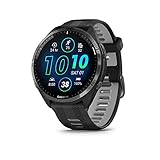 Garmin Forerunner 965
 AMOLED multisport with the training-load and threshold metrics most of these sessions assume you can see day to day.
Check price on Amazon → COROS APEX 2 Series GPS Watch
 Sapphire titanium and the longest battery in its class, which is the deciding feature once a day out runs past a few hours.
Check price on Amazon → Favero Assioma Uno Power Meter Pedal
 Single-sided pedal power, the cheapest honest entry into training with watts rather than estimating from heart rate.
Check price on Amazon →As an Amazon Associate we earn from qualifying purchases, at no extra cost to you.