The Tor des Géants ("Tour of the Giants") is a non-stop, single-stage 330 km mountain ultra around the Aosta Valley in northern Italy, held in mid-September. The course climbs 24,000 m (78,700 ft) — equivalent to summiting Everest from sea level nearly three times — across two of the highest haute routes in the Alps. Cutoff: 150 hours (six days, six hours). It is widely considered the most demanding non-stop ultramarathon in the world.
The course
A clockwise loop starting and finishing in Courmayeur (the same Italian alpine town that is the mid-point of UTMB). The course follows the Alta Via 1 and Alta Via 2 — two high-mountain trekking routes typically completed over 7–10 days each. The Tor combines them into a single non-stop loop, climbing over 25 mountain passes, most above 2,500 m.
Major terrain:
- Cresta dell'Arp ridge — exposed scramble at 2,600 m
- Col Loson — 3,300 m, the highest point of the race
- Rifugio Frassati and the rifugio network — manned mountain huts every 15–25 km that double as aid stations
- Multiple glacier-adjacent crossings; some sections require fixed cables/chains
Most finishers spend 100–130 hours on course. The fastest run sub-75. The slowest run right up to the 150-hour cutoff. Field size is about 1,000 runners; finish rate hovers around 50%.
By the numbers
- Distance: 330 km / 205 miles
- Vert gain: 24,000 m / 78,700 ft
- Vert per mile: ~384 ft/mi (extreme mountain)
- High point: Col Loson, 3,300 m / 10,800 ft
- Cutoff: 150 hours (6 days, 6 hours)
- Surface: singletrack, scree, glacier-adjacent rock, fixed cables, occasional Via Ferrata sections
- Aid stations / rifugios: ~25 stations, mix of formal Tor checkpoints and Italian alpine club rifugios
- Date: mid-September (Sunday start)
Sleep strategy is the race
Tor is decided by sleep more than fitness. The cutoff allows for ~6 days, which means a typical mid-pack finisher will need to sleep 4–8 hours per 24-hour cycle to maintain cognitive function, decision-making, and tolerance of altitude.
Three sleep strategies exist:
- Polyphasic: 30–60 min naps every 12–18 hours at rifugios. Total sleep across the race: 6–10 hours. Used by elites.
- Mid-pack standard: One 2–3 hour sleep block + 1–2 short naps per day. Total: 12–18 hours of sleep across the race.
- Conservative: 4–5 hours per night plus naps. Used by runners targeting the cutoff. Risk: too much sleep and you miss the 150-hour cutoff.
Sleep is taken at "Life Bases" — five major checkpoints with cots, blankets, and showers (Valgrisenche, Cogne, Donnas, Gressoney, Valtournenche) — and at rifugios mid-section. Many runners pre-position drop bags at Life Bases with sleep gear and clean clothes.
How to qualify
Qualifying for Tor des Géants requires:
- One ultra of 100+ km in the qualifying window (typically last 24–30 months)
- OR a finish at one of the recognized 200+ km mountain ultras (Bigfoot 200, UTMB 100M, Tor130, etc.)
- Lottery selection — Tor des Géants is oversubscribed roughly 3:1; international entries even more
There is also a Tor des Glaciers (450 km, 32,000 m vert) and a Tor130 (130 km) for less-qualified runners or those building toward the full Tor.
Gear strategy
- Vest: 15L for the mandatory kit and weather variability. Salomon Adv Skin 12 or UltrAspire Zygos 5.0.
- Poles: Mandatory in spirit. LEKI Cross Trail FX or Black Diamond Distance Carbon Z. Y-shaped baskets (sturdier on Italian alpine terrain than running poles).
- Shoes: Mountain-aggressive lugs. Hoka Speedgoat 6, Salomon S/Lab Genesis, La Sportiva Mutant. Two pairs minimum, swap at Life Bases.
- Layers: Mandatory waterproof shell + insulated mid-layer + warm hat + gloves. The Col Loson section can drop below freezing even in September. Patagonia Storm10 + R1 Air pullover is a popular combination.
- Headlamp: Two required. Primary: Petzl Nao RL or Black Diamond Sprint 225. Backup: Petzl ACTIK Core. Multiple battery sets.
- GPS / phone: Course is well-marked but exposure is real. Carry a phone with offline maps (Komoot or Mapy.cz) and a satellite communicator (Garmin inReach Mini 2) is a smart-not-required addition.
- Anti-chafe + foot care: Bring more than you think. 5+ days on feet in mountain shoes destroys skin. Trail Toes, Body Glide, Aquaphor in your drop bag.
Pacing strategy
Tor pacing is unlike any other race because it spans 5+ days. Most successful Tor finishers describe the race as "five back-to-back hard hiking days, with running on the descents and flats." Trying to run the climbs early in the race blows up the legs for the remaining 200+ km.
Veterans recommend:
- Walk every climb. Run every descent (carefully) and flat (when there is one).
- Eat at every aid station and every rifugio. The Italian alpine club hut food (polenta, soup, prosciutto, cheese) is excellent and provides real calories.
- Pre-plan sleep windows before the race. Don't decide where to sleep when you're 60 hours in and exhausted.
- The race opens with the hardest section. The Col Loson day breaks runners early; respect it.
Crew + pacing rules
Pacers are not allowed. Crew is allowed at the five Life Bases only — the other 20 aid stations are runner-self-supported. Most international runners hire a Courmayeur-based shuttle/crew service rather than trying to navigate the Italian alpine roads themselves between Life Bases.
The Tor experience
Tor des Géants has a different feel than UTMB or Western States. It's slower, lonelier, more contemplative. The Italian rifugio network — small mountain huts staffed by volunteers, serving warm soup at 3 AM at 8,000 ft — is unlike any aid network in the U.S. ultra scene. The night sections through high passes, with only your headlamp and the occasional bell of a grazing cow, are described by Tor finishers as among the most profound hours they've spent outdoors.
Most who finish describe the Tor as the hardest thing they've ever done — and many return. Tor is not a race you do once.
What these sessions assume you are measuring with
Every pace, zone and power figure here needs something recording it. These three cover running, long days and the bike.
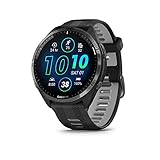 Garmin Forerunner 965
 AMOLED multisport with the training-load and threshold metrics most of these sessions assume you can see day to day.
Check price on Amazon → COROS APEX 2 Series GPS Watch
 Sapphire titanium and the longest battery in its class, which is the deciding feature once a day out runs past a few hours.
Check price on Amazon → Favero Assioma Uno Power Meter Pedal
 Single-sided pedal power, the cheapest honest entry into training with watts rather than estimating from heart rate.
Check price on Amazon →As an Amazon Associate we earn from qualifying purchases, at no extra cost to you.