Tahoe 200 — Destination Trail's flagship 200-miler — runs 205 miles around Lake Tahoe, traversing both the California and Nevada sides. 41,000 feet of climb. 100-hour cutoff. Held in early September. Considered the most accessible 200-miler — fewer technical sections than Bigfoot 200, more crew-accessible aid stations than Cocodona 250.
The course
A loop around the lake on a mix of Tahoe Rim Trail, Pacific Crest Trail (briefly), and connecting sections. Elevation ranges from 6,225 ft (lake level) to 9,735 ft (highest pass). The course is more runnable than Bigfoot — more jeep roads and groomed trail, fewer scramble sections. Lake views are constant. Aid stations every 10–15 miles, most crew-accessible.
By the numbers
- Distance: 205 miles (loop)
- Vert gain: 41,000 ft
- Vert per mile: 200 ft/mi (moderate; volume is the challenge)
- Lowest point: 6,225 ft (lake level)
- Highest point: 9,735 ft
- Cutoff: 100 hours
- Date: Second weekend of September
- Average finishing time: ~75 hours
How to qualify and enter
Lottery-entry. 100-mile qualifier required. Less competitive than Cocodona; first-time entrants often get in within 1-2 lottery cycles.
The 200-mile considerations
Same as any 200: sleep is a discipline (most finishers sleep 60-90 minutes total), foot care is constant, crew is the race. The Tahoe altitude (always above 6,000 ft) adds another layer — pre-acclimation matters.
Gear strategy
- Vest: 12L. UltrAspire Zygos 5.0 or Salomon Adv Skin 12.
- Shoes: 2-3 pairs to rotate. Hoka Speedgoat 6 + Hoka Tecton X.
- Layers: insulated mid-layer, waterproof shell. Mountain temperatures can swing 50°F.
- Sleep kit: in your crew vehicle.
- Headlamp: 2 primary + 2 backup.
The Tahoe experience
Most finishers describe Tahoe as the most beautiful 200-mile course on the planet. Lake views from ridgelines, granite peaks, alpine meadows. The course is friendlier than Bigfoot 200 (fewer brutal sections) and Cocodona 250 (less heat, less remoteness). The right pick for a first 200-miler.
What these sessions assume you are measuring with
Every pace, zone and power figure here needs something recording it. These three cover running, long days and the bike.
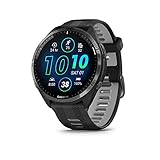 Garmin Forerunner 965
 AMOLED multisport with the training-load and threshold metrics most of these sessions assume you can see day to day.
Check price on Amazon → COROS APEX 2 Series GPS Watch
 Sapphire titanium and the longest battery in its class, which is the deciding feature once a day out runs past a few hours.
Check price on Amazon → Favero Assioma Uno Power Meter Pedal
 Single-sided pedal power, the cheapest honest entry into training with watts rather than estimating from heart rate.
Check price on Amazon →As an Amazon Associate we earn from qualifying purchases, at no extra cost to you.