Pacing an ultra is not the same as pacing a marathon. In a marathon, you run goal pace and hope you can hold it. In an ultra, you run conservative-of-target pace, hold it, and then choose whether to increase effort in the closing miles based on how you feel. The biggest mistake in ultra pacing isn't going too slow at the end — it's going too fast at the start.
The four phases of an ultra
Phase 1 — The neutral phase (first 20–30% of race)
Goal: hold a conversational pace. Heart rate at the bottom of Zone 2 (or below). Effort that feels too easy.
Most runners blow ultras by ignoring this phase. The adrenaline of the start, the social pressure of the field, the freshness of the legs — all push you to run 10–20% harder than you planned. That extra effort cashes in at mile 60 as bonking, leg cramps, and DNFs.
Discipline rule for Phase 1: you should feel like you're holding back. If you feel "in rhythm," you're already going too fast. The first time you check your watch and want to speed up, don't.
Phase 2 — The settled phase (30–60% of race)
Goal: enter race rhythm. Pace is now the pace. Heart rate is mid-Zone 2. Effort is sustainable but no longer feels easy.
This is the longest phase and the one where most of the race actually happens. Eat at every aid station. Drink consistently. Don't think about the finish — think about the next aid station.
Phase 3 — The dark patch (60–85% of race)
Most runners hit a dark patch somewhere in this range. It typically lasts 30–90 minutes. It is almost always caused by under-fueling, sleep debt (in 100s+), or both — dressed up as bigger problems ("I'm injured," "I should drop," "this isn't my day").
Pacing in the dark patch:
- Slow down deliberately. Walk if you need to.
- Eat 200 calories of fast carbs.
- Take 200mg sodium.
- Stay moving forward. Don't stop and sit.
- If still bad after 30 minutes, sit at the next aid station for 8 minutes and reset (broth, real food, walk out).
80% of dark patches resolve with this protocol. Don't drop in a dark patch. Drop only after the patch has resolved and you can think clearly — and at that point, most runners realize they want to keep going.
Phase 4 — The closing phase (final 15% of race)
Goal: spend everything you saved.
If you paced Phases 1–2 conservatively, you'll have legs in Phase 4. The runners passing people in the final 10–20 miles of an ultra are not the fittest — they are the ones who paced correctly. Open the throttle at the right moment. Your last 10K should feel hard, not catastrophic.
The three pacing inputs to actually watch
1. Heart rate (when you have it)
For runners with a chest strap or accurate optical HR:
- First hour: below 70% max HR. Most runners' Z2 ceiling.
- Middle hours: 72–78% max HR. Z2 plus.
- Closing miles: can drift up to 80%+ if effort feels right.
Watch HR at the start specifically. If you're 10 minutes in and HR is already at mid-Z2, slow down. Adrenaline + fresh legs are tricking you.
2. Perceived effort (always)
The conversation test: can you speak full sentences out loud right now? If yes, you're at the right effort. If sentences feel hard, you're going too hard. This is the most reliable pacing tool in the world; it works whether or not you have a watch.
3. Aid-station math
Pre-race, plan your splits to each aid station. During the race, check your time at each aid: are you on plan, behind, or ahead?
- 5+ minutes ahead of plan in the first half: Slow down. You're paying interest you can't afford.
- On plan or 1–2 minutes behind: Perfect. Hold pace.
- 5+ minutes behind in the first half: Don't try to make it up. Continue at current pace; recalculate the rest of the race.
- Ahead of plan in the closing phase: Run.
The pacing chart for 100-milers (rough working baseline)
A 24-hour 100M target pace is roughly 14:24 per mile across the full race. Distribute that as:
- Miles 1–25: 13:00–13:30/mi (a hair faster than average; legs are fresh, but discipline matters)
- Miles 25–60: 14:00–14:30/mi (settled rhythm)
- Miles 60–85: 15:30–16:30/mi (the dark patch + slowest section, often with significant walking)
- Miles 85–100: 13:30–14:30/mi (the closing acceleration if you have legs)
Adjust for course difficulty: Hardrock pacing chart has 10-min/mi differences from this; Vermont 100 is 1–2 min/mi faster.
Course-specific pacing rules
For mountain ultras (Hardrock, UTMB, Wasatch, Bear)
- Walk every climb steeper than 8%, even if you have legs to run it.
- Run downhills carefully. The first time you blow your quads on a 3,000-ft descent at mile 40, the rest of the race ends.
- Use poles always. Save the legs.
- Pacing by altitude: at 11,000+ ft, plan to be 25–40% slower than sea-level pace, even when your effort feels normal.
For runnable ultras (Vermont, Western States, Leadville)
- The temptation to run-everything is the danger. Walk the climbs even when "they look easy."
- Heat management at WSER: dunk in every creek; ice in the bandana at every aid station.
- The closing phase pace differential is bigger: a runner who paced Vermont correctly may run miles 90–100 a full minute per mile faster than the middle.
For desert ultras (Cocodona, Black Canyon, MDS)
- Heat-pacing rules everything. When the sun is high, slow down by 30%, regardless of effort.
- Run early morning and evening; walk midday.
- Hydration discipline: 500ml per hour minimum; 300mg sodium per liter.
For 200+ milers
- Pacing is a daily metric, not a per-mile metric. Aim for a sustainable daily mileage (50–70 miles per day) and a sustainable sleep window.
- The biggest pacing error in 200s isn't running too fast on day 1 — it's not sleeping enough on night 1. The next 48 hours suffer.
- Plan walking sections. Most successful 200-mile finishers walk 60%+ of the race deliberately.
The pacing equipment short list
- Watch with HR + GPS — the COROS Apex 2 Pro and Garmin Fenix line are the standards.
- Heart-rate chest strap — for races where wrist HR is unreliable (heavy pack chest contact, arm swing variance). Polar H10 or Garmin HRM-Pro Plus.
- Pre-printed pacing card — laminated, pinned to your vest. Has goal time at each aid station and notes ("walk this climb," "ice up here").
- A friend with a phone — text updates from crew at major aid stations. The crew sees the splits faster than you do.
The honest summary
Pacing strategy is not a number. It's a discipline of running slower than you want to in the first half so you can run faster than expected in the second. The runners who consistently finish well in ultras are not the fittest — they are the most pacing-disciplined. The good news: pacing is trainable. Practice it on every long run. By race day, it should be automatic.
The other honest thing: most ultras are won and lost in the first hour. If you can resist running too hard in the first 60 minutes — when everyone around you is running too hard — you will out-finish 80% of the field by sundown.
What these sessions assume you are measuring with
Every pace, zone and power figure here needs something recording it. These three cover running, long days and the bike.
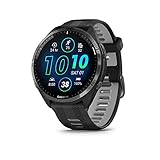 Garmin Forerunner 965
 AMOLED multisport with the training-load and threshold metrics most of these sessions assume you can see day to day.
Check price on Amazon → COROS APEX 2 Series GPS Watch
 Sapphire titanium and the longest battery in its class, which is the deciding feature once a day out runs past a few hours.
Check price on Amazon → Favero Assioma Uno Power Meter Pedal
 Single-sided pedal power, the cheapest honest entry into training with watts rather than estimating from heart rate.
Check price on Amazon →As an Amazon Associate we earn from qualifying purchases, at no extra cost to you.