📘 Get the printable PDF version
Subscribe to Endure Weekly and get this 22-week 100K plan as a printable PDF — plus the Ultimate Zone 2 Training Guide. Free.
Endure Weekly · Free
✓ Check your email. We just sent the welcome and your free Zone 2 Training Guide.
Wednesday letter from the studio. Unsubscribe anytime.
A 100K (62 miles) is the quiet middle of ultrarunning. Less iconic than the 100, more demanding than the 50-miler, and the distance where most runners learn to handle real night running and serious fueling. It's also the perfect bridge race before a 100-miler.
Who this plan is for
- You've finished a 50-miler in the last 18 months
- You're running 45–55 mpw comfortably
- You have 22 weeks of consistent training
- You're either targeting a 100-miler in the year ahead, or want a true ultra without the 100-mile commitment
Three phases
Weeks 1–7 (Base): 45 → 55 mpw. Long runs 16 → 22 mi.
Weeks 8–18 (Build): 55 → 75 mpw. Long runs 22 → 36 mi. Heavy back-to-backs.
Weeks 19–22 (Taper): 75 → 50 → 35 → 25 mpw.
A peak week (week 17)
- Monday — rest + 25 min strength
- Tuesday — 8 mi easy with strides
- Wednesday — 10 mi with 6 × 5-min hill repeats
- Thursday — 8 mi easy
- Friday — rest
- Saturday — 32 mi long, on race-similar terrain
- Sunday — 16 mi back-to-back, easy pace
Total: 74 mi. The 32/16 weekend is the workout that makes your race possible.
Night running — the new skill
A 100K takes 14–18 hours for most first-time finishers. That means at least 4–6 hours of night running. This is the new variable from a 50-miler:
- Train in the dark. At least three long runs in the build phase done partially or fully in the dark.
- Headlamp practice. Use the same headlamp you'll race with. Get familiar with battery swapping at speed.
- Pace shift. Night running is 10–20% slower than day running for most. Plan splits accordingly.
- Mental. The first hour of night running is the lowest psychological point of the race for most. Push through it; it gets easier.
Fueling — the gut-stretch zone
A 100K runs 3-4 hours longer than a 50-miler. Cumulative calorie need: 8,000-12,000 cal. Absorption max: 250-300 cal/hr trained gut. The gap is where the bonk lives.
From week 9 of training, every long run includes 250 cal/hr fueling at race pace. Same gels, same flask mix. By week 17, your gut should reliably handle 280 cal/hr without protest. If it can't, the race will surface that limit.
The drop bag rehearsal
A 100K is the first race where drop bags really matter. Practice the drop-bag swap during your build-phase BTBs:
- Set up a "fake aid station" at your halfway point — water, gels, a sock change, body glide.
- Do the swap in under 5 minutes.
- Test what doesn't work (gels you don't want at hour 7, socks that take too long to change, etc.) and fix it before race day.
Race-week routine
- Tuesday: last hard effort — 5 × 3 min at threshold
- Wednesday: 5 mi easy
- Thursday: rest
- Friday: 2 mi shake-out + strides
- Saturday: rest, hydrate, carb-load
- Sunday: race
Race-day pacing
The first 30 miles of a 100K should feel insultingly easy. You're holding back. Walk the climbs. Eat constantly. The race begins at mile 35.
The night-section transition (typically miles 40-60) is the deciding section. If you've trained night running, this is where you make up time on runners who haven't. If you haven't trained for it, this is where you bleed time.
What's next
A 100K is the ideal bridge to a 100-miler. You've now done 14-18 hours of running, tested night-running fitness, and exercised your fueling protocol at near-race-day duration. The 100-mile gap (38 more miles, ~10 more hours) is incremental from here. Most 100K finishers who continue into a 100-miler within 12 months finish their first 100. Plan accordingly.
What these sessions assume you are measuring with
Every pace, zone and power figure here needs something recording it. These three cover running, long days and the bike.
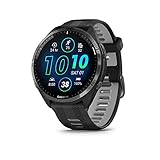 Garmin Forerunner 965
 AMOLED multisport with the training-load and threshold metrics most of these sessions assume you can see day to day.
Check price on Amazon → COROS APEX 2 Series GPS Watch
 Sapphire titanium and the longest battery in its class, which is the deciding feature once a day out runs past a few hours.
Check price on Amazon → Favero Assioma Uno Power Meter Pedal
 Single-sided pedal power, the cheapest honest entry into training with watts rather than estimating from heart rate.
Check price on Amazon →As an Amazon Associate we earn from qualifying purchases, at no extra cost to you.