Most non-ultrarunners ask the same question, eventually: “Why?” Why pay $400 to suffer for 24 hours through a forest. Why give up six months of weekend mornings to a training plan. Why drag a crew along to wait at remote aid stations in the dark for the privilege of handing you a sandwich at 3 AM.
The romantic answer doesn’t quite work. Below: the honest one.
What it isn’t about
It isn’t about fitness. You’d get fitter doing intervals on a track. The 100-mile pace is too slow to drive cardiovascular adaptation efficiently.
It isn’t about weight loss. Most ultrarunners actually maintain or gain weight during peak training due to the volume of food required.
It isn’t about glory. Almost no one watches an ultra. There’s no audience, no prize money for most runners, no career upside.
It isn’t even mostly about the destination. Crossing a finish line is 30 seconds of euphoria. The 23 hours and 59 minutes 30 seconds before it are not euphoric.
What it actually is about
A 100-mile race compresses a year’s worth of self-knowledge into one day. You find out:
- What you do when no one’s watching at mile 65
- What you do when your body asks you to stop and you have to choose
- Who you are when you’ve been moving for 18 hours and only your honest self is left
These are answers most modern lives don’t generate. Office jobs, comfortable lives, abundant food — they don’t ask you for these answers. The 100-miler asks. The answer is yours forever after.
The other thing
There’s also the simpler thing: it’s beautiful out there. The first sunrise at mile 15 of Western States. The high passes of Hardrock at noon. The dark forest of Cascade Crest at 2 AM with your headlamp the only light. The Bear Lake finish at dawn after 24 hours.
Most non-ultrarunners don’t get to experience these landscapes the way ultrarunners do. The volume of beautiful ground covered in a 100-mile race exceeds what most travelers see in a year. The relationship to landscape changes when you’ve moved through 100 miles of it under your own power.
You don’t drive into a place after running 100 miles through it. You arrive.
The hard part is the point
Easy version of the answer: “I do hard things to feel alive.” This is the thing people say in podcast interviews. It’s not quite right.
Closer version: hard things produce a kind of clarity that easy things don’t. Most decisions in modern life are reversible, hedge-able, optimizable. A 100-miler isn’t. Once you start, you finish or you don’t. The constraint produces a clarity you can’t manufacture in a meeting room.
The community
Maybe the most under-discussed answer: the people. Ultrarunning has the friendliest, weirdest, most generous community in endurance sport. Crew at any 100-miler and you’ll meet ex-finishers volunteering at remote aid stations, ex-elite runners pacing strangers, race directors who know runners by name across decades.
The marathon world is bigger and slicker. The ultra world is smaller and warmer. Most people who try ultras end up staying because of the community, not the running.
The honest cost
100-mile training takes 6 months of weekend mornings. The race itself takes 24-36 hours. Recovery takes 4-6 weeks. The cumulative time investment is real, and it costs other things — fewer Saturdays with family, less spontaneous travel, more “I can’t, I have a long run” texts.
Most ultrarunners who keep racing have figured out that the cost is worth it. Most who quit didn’t.
It’s a fair trade. Just be honest with yourself and with the people in your life about what you’re choosing.
The note we’d send to ourselves before our first one
Don’t try to “win” your first 100. Don’t try to set a sub-24 PR on your first attempt. Just finish.
Walk every climb. Eat at every aid station. Tell your crew you love them. Find a stranger to hug at the finish.
Do that race once. Then decide what comes next.
Most of what makes ultras worth it isn’t visible from the outside. You’ll find out for yourself, somewhere around mile 60. We’re cheering for you.
What these sessions assume you are measuring with
Every pace, zone and power figure here needs something recording it. These three cover running, long days and the bike.
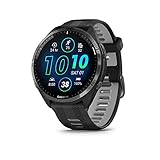 Garmin Forerunner 965
 AMOLED multisport with the training-load and threshold metrics most of these sessions assume you can see day to day.
Check price on Amazon → COROS APEX 2 Series GPS Watch
 Sapphire titanium and the longest battery in its class, which is the deciding feature once a day out runs past a few hours.
Check price on Amazon → Favero Assioma Uno Power Meter Pedal
 Single-sided pedal power, the cheapest honest entry into training with watts rather than estimating from heart rate.
Check price on Amazon →As an Amazon Associate we earn from qualifying purchases, at no extra cost to you.