Every ultra of more than six hours has a bonk window. It’s the period between hour four and hour ten, where glycogen depletion catches up with the mental fatigue of having already been racing for half a day, and the runner stops fueling well. Most DNFs in 100-milers are decided in this window — the runner who skips two gels at hour six is the runner sitting at an aid station at hour twelve, unable to leave.
The bonk window isn’t about the bonk itself. It’s about the small fueling decisions in the window that compound into a bonk three hours later. Skipping one gel doesn’t bonk you. Skipping one gel and then another and then “I don’t feel hungry” and then “I’ll wait until the next aid station” — that bonks you.
Why the window exists
By hour four, you’ve burned through most of your stored glycogen and you’re fueling almost entirely on what you ingest. By hour six, your gut is processing food in suboptimal conditions — you’re sweating, you’re warm, you’re slightly dehydrated. By hour eight, your sweet flavors are starting to nauseate you. By hour ten, you’ve already decided whether you’re going to finish well or not. You just don’t know it yet.
The brain is also tired by hour six. Decisions get worse. “I’ll skip this gel and have it next time” sounds reasonable. It isn’t.
The defense — set an alarm
The single most effective intervention: a 30-minute repeating alarm on your watch. When it beeps, you eat. Even if you’re not hungry. Especially if you’re not hungry. The “I’m not hungry” feeling at hour seven is your stomach communicating poorly, not telling you the truth.
Eat by the clock, not by appetite. That’s the rule. It’s not glamorous. It works.
If you’re already in the bonk
Late warning signs: light-headedness, sudden cold (even in heat), inability to focus on conversation, cravings for “anything but another gel.” If you notice these, you’re 30 minutes from a real bonk. The defense:
- Walk for 10 minutes. Stop running.
- Eat 200 calories of fast carbs immediately — gel, gummies, sugar drink.
- Take 200mg of sodium (LMNT, SaltStick chew, broth at the next aid station).
- Sit at the next aid station for at least 8 minutes. Don’t push through.
- Eat real food at that aid station. Boiled potato. PB&J. A cup of broth. Something solid.
- Resume walking. Run only when the light-headedness has been gone for 20 minutes.
A bonk caught early at hour seven costs you 30 minutes. A bonk ignored at hour seven becomes a DNF at hour fifteen.
The training fix
The best bonk-window defense is training your gut. If you’ve never eaten 250 cal/hr on a 6-hour training run, your race-day gut won’t either. Long runs in training need to mimic race fueling exactly — same gels, same flask mix, same intervals. The gut adapts the same way the legs adapt: slowly, with consistent stimulus.
Most ultrarunners under-fuel in training and then expect their stomach to handle race-day fueling. It usually doesn’t. The bonk window is the body telling you what your gut can’t process. Training in the right ranges — 250+ cal/hr on every long run — is the fix.
The runners who get past the bonk window cleanly are almost always the ones who trained their guts as deliberately as their legs. The 6-month plan you’re following has 24 long runs. Use all 24 to dial in fueling. Mile 70 is too late to discover that gels nauseate you.
What these sessions assume you are measuring with
Every pace, zone and power figure here needs something recording it. These three cover running, long days and the bike.
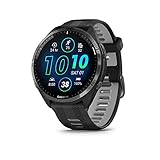 Garmin Forerunner 965
 AMOLED multisport with the training-load and threshold metrics most of these sessions assume you can see day to day.
Check price on Amazon → COROS APEX 2 Series GPS Watch
 Sapphire titanium and the longest battery in its class, which is the deciding feature once a day out runs past a few hours.
Check price on Amazon → Favero Assioma Uno Power Meter Pedal
 Single-sided pedal power, the cheapest honest entry into training with watts rather than estimating from heart rate.
Check price on Amazon →As an Amazon Associate we earn from qualifying purchases, at no extra cost to you.