Most ultrarunners under-train strength. The “real runners just run” attitude costs them — knee pain, hip issues, late-race form collapse, slow recovery. Below: the minimum effective dose.
The case for strength
Two studies you can take to the bank:
-
Endurance + strength runners run faster than endurance-only runners at the same VO2max. The strength work makes the running more efficient.
-
Endurance + strength runners get injured 30-50% less than endurance-only runners. Tendon and ligament resilience comes from load, not from running.
For ultrarunners specifically: strength work prevents the late-race form collapse that costs 30-60 minutes in the back half of 100-milers. The runner who can hold form at hour 18 finishes 30 minutes ahead of the runner who can’t.
The two-day-a-week program
Two sessions per week, 25 minutes each. Monday and Thursday work for most runners. Skip if you ran a hard workout or long run that day; resume the next non-quality day.
Session A (Monday — leg-focus)
Squats — 3 sets of 10. Bodyweight; add load when easy. Focus on depth and knee tracking.
Single-leg deadlifts — 3 sets of 8 per leg. Bodyweight or hold a dumbbell. Slow on the way down. This is the single highest-leverage exercise for trail runners.
Calf raises — 3 sets of 15 per leg. Off a stair edge. Critical for Achilles health.
Plank — 3 × 45 seconds. Front plank, side plank each side.
Glute bridge — 3 sets of 15. Bodyweight. Focus on glute activation.
Session B (Thursday — total-body)
Step-ups — 3 sets of 10 per leg. Onto a chair or box. Slow up, slow down.
Push-ups — 3 sets of 10. Knee push-ups if needed.
Single-leg calf raise — 3 sets of 12 per leg. Slow eccentric. Achilles maintenance.
Side plank with hip drop — 3 × 10 per side. Builds lateral hip strength critical for trail running.
Hollow-body hold — 3 × 30 seconds. Core endurance; transfers directly to running posture.
That’s it. 25 minutes, twice a week, no gym, minimal equipment.
What we don’t recommend
Heavy barbell work for ultrarunners. Powerlifting (heavy squats, deadlifts at 80%+ 1RM) builds mass and stiffness — both work against ultra running. If you’re doing powerlifting or CrossFit alongside ultra training, your run performance is being held back. Pick one priority per cycle.
HIIT classes. Marketing-driven exercise. Most HIIT classes don’t develop the specific running-economy strength endpoints. The two-day program above is more efficient for less time.
Strength on a hard-running day. Don’t strength-train on a long-run day or interval day. Recovery is compromised. Schedule strength on easy-run days or rest days.
When to add weight
Bodyweight is enough for the first 4-8 weeks. After that, add load slowly:
- Squats: start with a dumbbell at chest, build to 30-50% of body weight.
- Single-leg deadlifts: add a dumbbell when the bodyweight version is easy.
- Step-ups: hold dumbbells for additional load.
The goal isn’t powerlifting numbers. It’s “challenging at 10 reps” — the body adapts to whatever load you can move 10 times with control.
What changes
After 6-8 weeks of consistent two-day strength work, most ultrarunners notice:
- Easier climbing (legs feel “stronger” without thought)
- Less knee discomfort on long runs
- Faster recovery between hard days
- Better posture in the back half of long runs
After 6 months: noticeable performance improvements at race pace.
After 2 years: the difference between you and runners who skipped strength becomes structural.
The two-day program isn’t fancy. It works because it’s done consistently. The version of you running mile 80 next year will thank the version of you doing single-leg deadlifts in your kitchen tonight.
What these sessions assume you are measuring with
Every pace, zone and power figure here needs something recording it. These three cover running, long days and the bike.
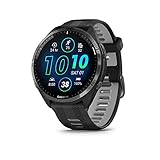 Garmin Forerunner 965
 AMOLED multisport with the training-load and threshold metrics most of these sessions assume you can see day to day.
Check price on Amazon → COROS APEX 2 Series GPS Watch
 Sapphire titanium and the longest battery in its class, which is the deciding feature once a day out runs past a few hours.
Check price on Amazon → Favero Assioma Uno Power Meter Pedal
 Single-sided pedal power, the cheapest honest entry into training with watts rather than estimating from heart rate.
Check price on Amazon →As an Amazon Associate we earn from qualifying purchases, at no extra cost to you.