Achilles pain is the injury that ends ultrarunning careers — not because it’s untreatable, but because it’s chronically under-treated. Most runners ice it, take a week off, and resume training; the pain comes back; they keep doing the same thing for years.
The good news: Achilles tendinopathy responds to a specific load-based rehab protocol that’s been validated in trial after trial. The bad news: the protocol is uncomfortable and slow, and most runners abandon it after 2 weeks.
Below: what the protocol actually is, and the mistakes most runners make.
The Alfredson protocol (the one that works)
Heel drops, twice daily, for 12 weeks. Yes, 12 weeks. That’s the protocol.
Setup: stand with the ball of your foot on a step, heel hanging off the edge. Hold a wall or railing for balance.
Movement: rise onto your toes using BOTH feet (concentric), shift all weight onto the affected foot, lower slowly (eccentric) over a 3-second count until the heel is below the step level. Use the unaffected foot to return to the top.
Volume: 3 sets of 15, with knee straight. 3 sets of 15, with knee bent. Twice a day. Every day.
That’s 180 reps daily, 1,260 a week, ~15,000 across the 12 weeks. The exercise produces controlled load on the Achilles and triggers tendon remodeling at the cellular level.
The seven mistakes
1. Stopping when the pain decreases. The protocol takes 12 weeks because tendon healing is slow. Most runners feel better in 3–4 weeks and stop. The pain comes back in month 4. Do the full 12 weeks.
2. Resting too much. Total rest weakens the tendon further. The protocol requires loading. Resting doesn’t fix tendinopathy; gradual eccentric load does.
3. Adding speed work too early. Don’t do tempo runs, intervals, or hill repeats during the protocol. All easy mileage. Speed reintroduces in week 13+.
4. Using NSAIDs daily. Ibuprofen masks pain but interferes with tendon remodeling. Use sparingly (post-workout, race-day) and not as a daily strategy.
5. Stretching aggressively. Static calf stretches under load (especially deep ones) can actually worsen tendinopathy. The Alfredson protocol replaces stretching as the primary intervention.
6. Switching to zero-drop shoes. A common myth: “low-drop shoes treat Achilles.” False. Lower drop increases Achilles load. During rehab, INCREASE drop (10–12mm) to offload. After full recovery, you can transition to lower drops if biomechanics support it.
7. Treating it as one event. Achilles tendinopathy is a chronic condition. Even after recovery, you need maintenance load (3 sets of 15 heel drops, twice a week) for the rest of your running career. Most relapses happen 6–12 months after stopping the protocol.
What about cortisone shots?
Don’t do them. Cortisone shots in the Achilles are associated with increased rupture risk. Almost every sports medicine doctor will steer you away from this. If a doctor offers a cortisone shot in your Achilles, get a second opinion.
When to see a sports physiotherapist
If the protocol hasn’t reduced pain by 6 weeks, see a physio. They’ll identify whether you have:
- Mid-portion tendinopathy (the standard kind, ~70% of cases — Alfredson works)
- Insertional tendinopathy (where the tendon meets the heel — needs modified protocol with limited eccentric range)
- Partial tear or paratenonitis (different conditions, different treatment)
Misdiagnosis is common. A 6-week trial of Alfredson is fine; longer than that without improvement deserves professional eyes.
Race during the protocol?
The 12-week protocol doesn’t require you to stop racing. You can race ultras during weeks 6+ of the protocol if your pain at race start is mild and stable. What you can’t do: introduce hard speed work, race short fast events (5K, 10K), or do anything that causes flare-ups lasting more than 24 hours.
The ultrarunner-specific note
Ultras are friendly to Achilles tendinopathy in one important way: the slower, lower-impact pace places less load on the tendon than fast running. Many runners with chronic mid-portion tendinopathy can finish 100-milers fine, but DNF a 5K from pain. The slower you run, the less tendon load.
Use this. If your Achilles is grumpy, train slower than usual. The aerobic gains transfer; the Achilles thanks you.
Twelve weeks of heel drops sounds like nothing. It feels like forever. Do it anyway. The runners who do this once never have to do it again.
What these sessions assume you are measuring with
Every pace, zone and power figure here needs something recording it. These three cover running, long days and the bike.
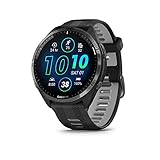 Garmin Forerunner 965
 AMOLED multisport with the training-load and threshold metrics most of these sessions assume you can see day to day.
Check price on Amazon → COROS APEX 2 Series GPS Watch
 Sapphire titanium and the longest battery in its class, which is the deciding feature once a day out runs past a few hours.
Check price on Amazon → Favero Assioma Uno Power Meter Pedal
 Single-sided pedal power, the cheapest honest entry into training with watts rather than estimating from heart rate.
Check price on Amazon →As an Amazon Associate we earn from qualifying purchases, at no extra cost to you.