Mountain races are decided as much by weather as by fitness. The same Western States that one year cooks runners in 105°F canyons can the next year drench them in cold rain at 7,000 ft. Reading mountain weather is part of the discipline. Here’s how.
What forecasts get wrong about mountains
Standard weather forecasts (Apple Weather, Google) use elevation-corrected models that work fine in cities. They fail in mountains. Three reasons:
-
Elevation lapse rate. Temperature drops ~3.5°F per 1,000 ft of elevation gain. The forecast for the trailhead is 30°F off from the high points. Mountain races crossing 5,000+ ft of elevation are running in 2–3 different climates simultaneously.
-
Microclimates. Aspect (which way a slope faces), tree cover, and proximity to water create temperature swings of 15–20°F across distances of less than a mile.
-
Convective storms. Afternoon thunderstorms in the Rockies are predictable enough that locals plan around them — but they don’t show up well on coastal-trained forecast models.
The forecasts that actually work
For US mountain races:
- NOAA point forecast (forecast.weather.gov) — the official US National Weather Service, with elevation-corrected zone data. Free.
- MountainForecast.com — multi-elevation forecast for specific peaks. Shows you what’s happening at 8,000 ft vs 12,000 ft separately.
- Windy.com — best visualization of how storms will move across the course over time.
- Locals’ Twitter/Strava feeds — runners who live near the race are usually 24 hours ahead of any forecast.
The forecast you actually need to make
Three numbers, race-day morning:
- Temperature range at the lowest and highest course points
- Storm timing window (often the same every day during summer in the Rockies — afternoon storms 2–6 PM)
- Wind speed at the high points (matters for hypothermia even at moderate temps)
Any race you’re running, build your gear around the worst-case scenario you’d run in. Not the median forecast.
What to pack — by race archetype
Western States (June, canyons): ice bandana, arm coolers, sun-protective shirt, electrolyte heavy. Cold-weather kit irrelevant.
Hardrock (July, 14,000 ft passes): waterproof shell (mandatory), insulated mid-layer, beanie, glove pair, mandatory survival kit. Hypothermia kills here, not heat.
UTMB (August, alpine): waterproof shell, insulated mid-layer, gloves, beanie, microspikes (some years), full mandatory kit per race rules.
Wasatch (September, Utah mountains): dual-condition kit. Daytime can hit 90°F; night above 9,000 ft can be 30s. Pack for both.
Cocodona (May, Arizona desert to mountains): desert sun gear early; cold-weather gear later when the course climbs to 7,000 ft.
The storm-decision rules
Mountain thunderstorms are not “is it bad to run in the rain” decisions. Lightning kills runners every year. The rules:
1. If you can hear thunder, you’re already in the strike zone. Get below the highest point you’re standing on. Find the lowest accessible terrain.
2. If you see the storm coming, descend now. Don’t try to outrun it across an exposed ridge.
3. The 30-30 rule. If lightning is less than 30 seconds between flash and thunder, you’re in danger. Wait 30 minutes after the last thunder before resuming.
4. Aid station pull-back. If race directors pull you off the course due to weather, accept it. Your buckle isn’t worth dying for.
The cold-weather killer
Hypothermia at altitude doesn’t happen at -20°F like you’d expect. It happens at 40°F + rain + wind, when wet runners stop moving fast enough to generate body heat. Most lethal hypothermia incidents in mountain ultras happen between 38°F and 50°F — not in winter conditions.
If you’re racing in the mountains and the forecast shows 40s + rain + wind, treat it as a serious-cold race. Pack the insulating mid-layer. Pack a full glove pair. Don’t be cute.
The single most useful tool
Buy a Rite-in-the-Rain notebook ($6) and pre-write your weather plan on race-week morning. “If it’s above 75°F at start, I take ice. If it rains before mile 50, I add the mid-layer at the next crew. If thunder by 2 PM, I find shelter.”
Mountain weather makes complex decisions easy if you’ve pre-decided. The runners who freeze on Hardrock didn’t have a plan; they reacted late.
What these sessions assume you are measuring with
Every pace, zone and power figure here needs something recording it. These three cover running, long days and the bike.
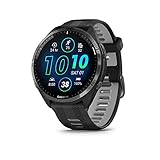 Garmin Forerunner 965
 AMOLED multisport with the training-load and threshold metrics most of these sessions assume you can see day to day.
Check price on Amazon → COROS APEX 2 Series GPS Watch
 Sapphire titanium and the longest battery in its class, which is the deciding feature once a day out runs past a few hours.
Check price on Amazon → Favero Assioma Uno Power Meter Pedal
 Single-sided pedal power, the cheapest honest entry into training with watts rather than estimating from heart rate.
Check price on Amazon →As an Amazon Associate we earn from qualifying purchases, at no extra cost to you.