Jim Walmsley is the best male American ultrarunner of his generation. He has, as of mid-2026, won Western States four times, set the course record (14:09 in 2019, since broken), won UTMB in 2023 — the first American man ever — and lived a kind of all-in commitment to the sport that most pros don’t have the constitution for.
The Walmsley story is more interesting than the Dauwalter one in one specific way: where Dauwalter’s success looks effortless, Walmsley’s success looks like sustained, public, sometimes-failing effort. He’s blown up at Western States. He’s DNF’d UTMB three times before winning it. He moved his family to Beaufort-sur-Doron, France for two years specifically to learn to race in the Alps.
The career, briefly
- 2016: Wins Lake Sonoma 50, signaling arrival
- 2017: Goes for Western States record at his first attempt; takes a wrong turn at mile 93 while leading
- 2018: Wins Western States, breaks the course record (14:30)
- 2019: Wins Western States again, breaks his own record (14:09)
- 2021: Wins Western States third time
- 2022: First UTMB attempt — finishes 4th
- 2022 (later): Moves to France with his wife; trains in the Alps
- 2023: Wins UTMB. First American man.
- 2024: Returns to U.S., wins Western States fourth time
What’s interesting in his training
A few things that stand out from interviews and his own social commentary:
1. He does intervals. Unusual for an ultrarunner. Walmsley still does track work, mile repeats, tempo runs. The road-running fitness translates to his ability to run faster than competitors at the front of races where pace matters (Western States in particular, on its runnable trail).
2. He runs a marathon-paced thirty. A regular workout in his peak Western States blocks: 30 miles at marathon pace. Few ultrarunners can hold marathon pace for that long. Walmsley can — the workout is what makes the early Western States miles look easy.
3. He trains the European mountain skill set in Europe, not in America. This was the explicit theory of moving to France. UTMB is a different race than Western States. The climbs are longer, steeper, slower. The technical descents are more aggressive. The poles work is different. He couldn’t learn it on Mt. Whitney; he had to learn it in Chamonix, on the actual course, year-round.
4. He’s coachable. This is unusual at his level. He’s worked with coaches — most prominently coach Jason Koop — and openly takes their input. The “I do it my way” energy that some elite ultrarunners cultivate is mostly absent. He’s a road-marathon-discipline athlete operating in an ultra-distance world.
5. He races a lot. The Walmsley calendar in any year typically includes 4–6 racing efforts, including non-target races. He uses races as fitness blocks. Most of his peers would consider this overracing; he’s clearly making it work.
The 2023 UTMB win
The win matters because it ended a 20-year drought. No American man had won UTMB. Several Americans had finished top-5 (Walmsley himself, Hayden Hawks, Tim Tollefson). The race had become the white whale.
The win itself wasn’t dominant — Walmsley led from km 100 onward but was pushed by Mathieu Blanchard and Zach Miller. He finished in 19 hours 37 minutes, about 30 minutes ahead of second. The post-race interview, in passable French and tearful English, was one of the most affecting moments in modern ultrarunning.
The takeaway from the win wasn’t that Walmsley was the most talented mountain runner in the field. It was that he’d put in the work — two years of European-mountain-specific training, three prior UTMB attempts, a willingness to publicly fail and try again — that no one else had been willing to put in.
What we can copy
1. Race a lot. Most non-elite ultrarunners under-race. They train for one A-race per year and do nothing else. Racing builds skills training can’t — pacing under stress, aid station efficiency, race-week routine, the experience of running into the dark patch with a number on. Race more.
2. Do the unsexy interval workouts. Most ultrarunners skip speed work because they think it’s irrelevant for ultra distance. It’s not — it’s where you build the engine that runs the easy pace easily. A weekly tempo or interval workout in a base block raises your aerobic ceiling.
3. Train the specific terrain of your A-race. Walmsley moving to France is the most extreme version of this. The transferable principle: the closer your training course is to your race course, the better you’ll race. Travel to your race location for a training camp if you can.
4. Be coachable. The willingness to take input from someone who sees you from the outside is the difference between athletes who plateau at age 35 and athletes who keep improving. Walmsley is the example of the elite who treats coaching as a multiplier, not a threat.
5. Race public failure as fuel. He DNF’d UTMB three times before winning. Most pros would have stopped trying after two. The willingness to keep showing up at the race that has rejected you is rare and worth modeling.
The honest summary
Walmsley is the example of all-in commitment. He moved continents to win a race. He works with coaches, does intervals, races a lot, and isn’t precious about his process. The takeaway isn’t that you should move to France — it’s that the level of seriousness he brings to training is the level of seriousness any of us could choose to bring to our own goals, scaled to our lives.
Most of us aren’t going to win UTMB. The Walmsley question for the rest of us isn’t “what do you have to do to win UTMB” — it’s “what would you do if you actually committed to your goal the way he committed to his?”
What these sessions assume you are measuring with
Every pace, zone and power figure here needs something recording it. These three cover running, long days and the bike.
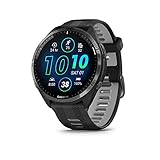 Garmin Forerunner 965
 AMOLED multisport with the training-load and threshold metrics most of these sessions assume you can see day to day.
Check price on Amazon → COROS APEX 2 Series GPS Watch
 Sapphire titanium and the longest battery in its class, which is the deciding feature once a day out runs past a few hours.
Check price on Amazon → Favero Assioma Uno Power Meter Pedal
 Single-sided pedal power, the cheapest honest entry into training with watts rather than estimating from heart rate.
Check price on Amazon →As an Amazon Associate we earn from qualifying purchases, at no extra cost to you.