Heat is the variable that ends Western States DNFs faster than any other. The American River canyons regularly hit 105°F by mid-afternoon, and runners who didn’t acclimate spend three hours sitting at aid stations trying to stop vomiting. The good news: heat acclimation is one of the most reliable interventions in endurance training. The protocol works.
The 10-day rule
Heat adaptation peaks at 10–14 days of exposure. Before day 7, the body is still struggling. After day 14, gains plateau. Block out 10–14 days before your hot race; your body will do the rest.
The mechanism: heat exposure increases plasma volume by 5–10%, lowers core temp at any given workload, lowers resting heart rate, and improves sweat efficiency (more output per gland, with lower sodium concentration). All of this transfers to performance — more so than altitude adaptation, more reliably than VO2 max work.
The protocol
Pick one of three modalities. All work; the right one depends on your access:
1. Sauna sessions (most efficient). 30 minutes at 175–195°F, 5–6 times per week. Done immediately after your run, while your core is already elevated. The first 4 sessions feel terrible. Sessions 5–10 your body adapts. Hydrate with electrolytes during and after.
2. Hot baths (most accessible). 40 minutes in 104–106°F water, every day or every other day, for 10 days. Easier to access than a sauna; almost as effective per session. Get in immediately after your run. Most people cannot tolerate this for the full 40 minutes initially — start at 15 and build.
3. Run-in-heat (hardest, most specific). Run in your race-day expected conditions. If you live somewhere cool, this means treadmill in heated bathroom + layers. If you live somewhere hot, just train at 1pm. The transfer is most direct but the workout quality is poor — you’re acclimating, not training.
When to do it
For Western States (late June): start your heat protocol around June 14. Finish 5–7 days before race day. Yes, that’s during your taper — that’s correct. Heat acclimation doesn’t compete with taper; the workouts are too short to interfere with leg recovery.
For Badwater (mid-July): start June 25 or so. Same 10–14 day window.
For Leadville (mid-August): no heat acclimation needed. Leadville is altitude, not heat.
What doesn’t work (and what people try anyway)
Sleeping in a sleeping bag in summer. Some runners try this for “passive heat exposure.” It does very little. The thermoregulatory response only triggers above ~99°F core temp. Sleeping warm doesn’t push you there.
A weekend in a hot place. 2–3 days isn’t enough. The adaptation needs the full window.
Heat-vest training in cold weather. Concept is right; works only when worn under real exertion at workout intensity. Most people overestimate how much they sweat in a heat vest.
Sodium and heat
Heat-acclimated athletes lose less sodium per liter of sweat — the body becomes more efficient. But you’re also producing more sweat. Net result: in absolute terms, you’ll lose roughly the same sodium hot-acclimated as not. Don’t reduce your sodium intake based on adaptation alone.
For the race: pre-load with Skratch Hyper Hydration (1,720 mg sodium) 60–90 min before start. Maintain 800–1,200 mg/hr through the heat sections. Most heat-day DNFs are sodium-bonk, not heat itself.
The post-acclimation taper
After your final heat session (5–7 days out), tapering happens normally. Heat adaptations decay slowly — about 50% loss per week. Your protocol is still 75–80% effective at race day even with a week of cool-weather taper.
If your race ends up cool, you’ve lost nothing. The plasma volume expansion still helps performance even at moderate temps.
For the heat-day races on the calendar — Western States, Badwater, the Cocodona May start — start the protocol two weeks out. Sauna or hot bath. The work is short, the upside is enormous, and the version of you running mile 60 in the canyon will thank you.
What these sessions assume you are measuring with
Every pace, zone and power figure here needs something recording it. These three cover running, long days and the bike.
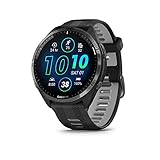 Garmin Forerunner 965
 AMOLED multisport with the training-load and threshold metrics most of these sessions assume you can see day to day.
Check price on Amazon → COROS APEX 2 Series GPS Watch
 Sapphire titanium and the longest battery in its class, which is the deciding feature once a day out runs past a few hours.
Check price on Amazon → Favero Assioma Uno Power Meter Pedal
 Single-sided pedal power, the cheapest honest entry into training with watts rather than estimating from heart rate.
Check price on Amazon →As an Amazon Associate we earn from qualifying purchases, at no extra cost to you.