Your runner asked you to crew their first ultra. They’re nervous. You’re nervous. You don’t have to know everything — most experienced crews are mostly winging it, just with more practice. But there’s a baseline of preparation that separates a great crew day from a disaster.
This is the short version. Read it the night before.
The job, in one sentence
Your job is to make every aid station stop fast, predictable, and warm. That’s it. Don’t try to be a coach. Don’t try to be a sports nutritionist. Just be the person who hands them what they need and sends them back out.
What to bring (the cooler/bin checklist)
Drinks:
- Coke (room temp + iced — they’ll want both at different points)
- Water
- Their preferred sports drink, pre-mixed (Tailwind, Gnarly Hydrate, etc.)
- Ginger ale (for nausea)
- Chicken broth (in a thermos, hot)
Food:
- 4–5 of their favorites (you should have asked them this)
- A few non-favorites (they may want something they didn’t predict — gherkins, watermelon, gummy bears, peanut butter sandwiches, mashed potatoes with salt)
- Real food for the night sections (mac and cheese, bean and rice burritos, pizza slices)
Clothing:
- Backup running socks (5+ pairs)
- A long-sleeve baselayer
- A wind shell + a real rain jacket
- A puffy jacket for sitting at aid station
- Beanie + gloves
- A change of full clothes for if they get soaked
- Spare shoes (one full size larger than race-morning size — feet swell)
Foot/skin care:
- Anti-chafe (Body Glide, Squirrel’s Nut Butter)
- Trail Toes for blisters
- Blister tape (KT or Leukotape)
- Scissors
- Foot powder (anti-fungal)
Tools / extras:
- Headlamps (2 working ones, fresh batteries)
- Phone charger + cable
- Ibuprofen + Tums (don’t dispense without asking — but have them)
- Wipes (baby wipes — they’ll be filthy)
- Trash bags
- A folding chair with arms (the chair matters)
- Their drop bag list, printed
What to say (and not say)
Say:
- “Sit down for a minute.” (Even if they don’t want to. The 60-second sit at aid station is recovery time.)
- “Eat this.” (Hand them food they can chew while moving.)
- “How are your feet?” (Open-ended — sometimes they don’t realize until you ask.)
- “Drink some Coke.” (At any point past mile 50, this is almost always the right answer.)
- “You’re doing better than you think.”
- “I’ll see you at [next aid station].” (Specific, calm.)
Don’t say:
- “How do you feel?” (Too open. Most runners answer this with “fine” even when they’re falling apart.)
- “You’re going to crush this.” (False optimism reads as not-listening when they’re suffering.)
- “Look how far you’ve come!” (Only useful if they bring it up.)
- “Are you sure you should keep going?” (Never. They make the drop call. You hold the line.)
- Anything that starts with “Just.” (Just one more aid station. Just a few more miles. Don’t do this.)
The 5-minute aid-station protocol
This is the goal. Most aid station stops should be under 5 minutes.
- Minute 0: Runner arrives. Hand them a chair. Hand them their preferred drink.
- Minute 1: Take off their pack. Refill bottles or replace soft flasks. Empty trash from pack pockets.
- Minute 2: Hand them food. While they eat, ask: “Anything bothering your feet? Any chafe? Any layers you want?”
- Minute 3: Address whatever they mentioned. Apply lube, change socks, hand them a shell, etc.
- Minute 4: Pack their pack with anything they said they wanted (extra gel, a backup buff, whatever).
- Minute 5: Stand them up. Confirm they have headlamp / poles / what they need. Send them out with a specific encouragement: “I’ll see you at [next aid]. You look strong.”
When to extend the stop
Some moments need more than 5 minutes. Don’t rush these:
- Visibly bonking (vacant eyes, repeating themselves, can’t make a decision): Sit them down. Make them eat. 10–15 minutes. Don’t let them leave until they’ve consumed 200+ calories and 16+ oz of fluid.
- Visible chafe / blister / foot issue: Address it now. Don’t let them push through; it will end the race.
- Hypothermic / overheating: Wrap them in a blanket / dunk in ice. Wait until vitals normalize.
- They want to drop: This is its own conversation. Read on.
When they want to drop
Almost every runner has a moment where they want to drop. It’s almost always the dark patch. Almost always fueling, almost always sleep, almost always bigger problems dressed up in their head.
Your job:
- Don’t agree right away.
- Don’t disagree right away either.
- Sit them down. Make them eat 300 calories and drink 16 oz.
- Wait 20 minutes.
- Then ask: “Do you still want to drop?”
- 80% of the time, the answer is no.
- If after 20 minutes of food/water they still want to drop, AND they have a real reason beyond exhaustion (injury, sickness, hypothermia, gear failure), help them drop. Drive them home. Don’t lecture.
- If they want to drop because of exhaustion only — that’s the dark patch. Hold the line. Send them out.
What to do between aid stations
You’ll have 2–6 hours between aid stations on most ultra courses. Use them to:
- Eat. Crews under-eat constantly. Pack lunch.
- Sleep if you can. Crewing a 100 is 24+ hours; a nap in the car is real.
- Re-pack the runner’s bin so the next stop is faster.
- Don’t drink coffee at every aid station. You’ll burn out at mile 60.
- Track them on the live race tracker if there is one.
- Don’t worry about them between stations. They’re fine. They’re running.
The honest summary
Most first-time crews over-prepare and over-react. The runners need someone calm, prepared, and predictable. Your runner doesn’t need you to be brilliant — they need you to be there, with the things they asked for, in the place you said you’d be, ready to send them back out.
That’s the whole job. Don’t overthink it. They’ll remember you for it.
What these sessions assume you are measuring with
Every pace, zone and power figure here needs something recording it. These three cover running, long days and the bike.
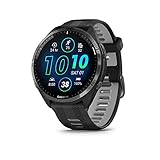 Garmin Forerunner 965
 AMOLED multisport with the training-load and threshold metrics most of these sessions assume you can see day to day.
Check price on Amazon → COROS APEX 2 Series GPS Watch
 Sapphire titanium and the longest battery in its class, which is the deciding feature once a day out runs past a few hours.
Check price on Amazon → Favero Assioma Uno Power Meter Pedal
 Single-sided pedal power, the cheapest honest entry into training with watts rather than estimating from heart rate.
Check price on Amazon →As an Amazon Associate we earn from qualifying purchases, at no extra cost to you.