Most ultrarunners reach a point where they ask: “Should I hire a coach?” The honest answer depends on where you are in the sport. Below: the framework.
The four real benefits of coaching
1. Accountability. A coach reviews your training. You’re less likely to skip workouts when someone’s looking. For runners with motivation issues — particularly during peak weeks when training feels overwhelming — accountability is the largest single benefit.
2. Training-week structure you can’t see for yourself. Most self-coached runners under-load or over-load specific systems. A good coach watches your data and notices “your tempo runs are too easy” or “you’re not recovering between long runs” — patterns that are invisible from the inside.
3. Race-week management. Pre-race nerves make most self-coached runners over-train or under-train in the final two weeks. A coach takes those decisions away — “do this workout, eat this meal, sleep this much.” The cognitive load reduction at peak nervousness is real.
4. Data interpretation. Heart rate, power, training load metrics — there’s a science to interpreting them, and most self-coached runners under-use them. Good coaches watch trend data and intervene before a problem becomes an injury.
The three reasons coaching is overrated
1. Generic plans are 90% as good as custom plans. A free training plan from a reputable source (your favorite running site, the first 100-mile plan, or similar) will work for 90% of self-motivated runners. The marginal improvement from a custom coach plan over a good template is small.
2. Many coaches aren’t qualified. The ultra coaching world has very low barriers to entry. “Ran some ultras myself” is the most common qualification. Real coaching skill — periodization, exercise physiology, individual psychology — is rarer than the marketing suggests. Vet your coach as carefully as a doctor.
3. The cost is non-trivial for the actual benefit. Most reputable ultra coaches charge $200-500/month. Over a 24-week cycle, that’s $1,200-3,000. For most runners that money is better spent on race entries, gear, or travel — all of which produce equivalent fitness gains via different mechanisms.
When to hire a coach
The right time to hire a coach is when you have a specific structural problem you can’t solve yourself:
- Targeting a sub-24 buckle and have plateaued. A coach can identify the specific weakness (likely back-half pacing, vert specificity, or fueling) and fix it.
- History of recurring injury. A coach with biomechanics chops can diagnose the root cause.
- Limited training time. A coach helps you maximize 6-8 hours/week when self-coached planning would waste it.
- Major life-stage shift. New parent, new job, new city — a coach helps you rebuild a sustainable structure.
When NOT to hire a coach
- You’re new to ultras. Read books, follow free plans, finish 2-3 ultras self-coached first. Hire a coach when you have specific goals and specific limits.
- You’re chasing motivation. A coach can’t make you want to train. The accountability benefit only works if you actually fundamentally want to train; if you don’t, no coach saves you.
- You want to “go pro.” Most coaches can’t get you there. Sponsorships and elite trajectories come from race performance, not coaching pedigree.
What a good coaching relationship looks like
- Weekly check-ins — written or audio, not just data review. The conversation about how training is going matters as much as the data.
- Customized plans — not just templates with your name pasted on them.
- Real explanations — coach should be able to explain why a workout is on the calendar, not just give you the workout.
- Adjustments based on life — coach who can’t adjust when work, family, or illness intervenes is a poor fit.
- End-state goals defined together — what does success look like, and what trade-offs are acceptable?
If your coach doesn’t deliver these, find a different coach. The market has plenty of options.
Self-coaching done well
If you go self-coached:
- Pick a structured plan (free template or paid e-book) — don’t invent your own week-to-week.
- Use objective data (HR, pace, sleep) — not “feel” alone.
- Find a community for accountability — running club, online group, training partner.
- Read 2-3 books on endurance training fundamentals (Daniels, McMillan, Friel).
- Join a Strava following so others can see your training and comment.
A self-coached runner with discipline, a good template, and a strong community produces 90-95% of what a coached runner produces. The 5-10% delta isn’t worth $3,000/year for most.
The honest middle
For most ultrarunners, the right move is occasional coaching, not continuous coaching. Hire a coach for a single 24-week race cycle once every 2-3 years to get a structural reset, learn the specific weaknesses in your training, then go back to self-coached with the new framework. This captures most of the upside at a fraction of the cost.
What these sessions assume you are measuring with
Every pace, zone and power figure here needs something recording it. These three cover running, long days and the bike.
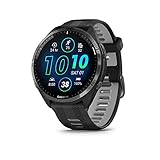 Garmin Forerunner 965
 AMOLED multisport with the training-load and threshold metrics most of these sessions assume you can see day to day.
Check price on Amazon → COROS APEX 2 Series GPS Watch
 Sapphire titanium and the longest battery in its class, which is the deciding feature once a day out runs past a few hours.
Check price on Amazon → Favero Assioma Uno Power Meter Pedal
 Single-sided pedal power, the cheapest honest entry into training with watts rather than estimating from heart rate.
Check price on Amazon →As an Amazon Associate we earn from qualifying purchases, at no extra cost to you.