The “180 strides per minute” rule has been gospel in running for 20 years. It’s mostly wrong, particularly for ultrarunners. Below: what cadence actually does, what it doesn’t, and the form cues that hold up at hour 10 of running.
Where 180 came from
Jack Daniels (the running coach, not the whiskey) counted the cadence of elite distance runners at the 1984 Olympics. He found most ran at ≥180 spm. The internet ran with it as a prescriptive rule: “you should run at 180 spm.” Daniels never said that. He observed it.
The actual finding: faster runners take more, shorter steps. The cadence is a result of speed and biomechanics, not a cause.
What cadence actually does
Higher cadence (more, shorter steps) does three things measurably:
- Reduces ground-contact force. Less impact per step. Useful for joint health over high mileage.
- Reduces over-striding. Forces foot strike under your center of mass, not in front of it.
- Smooths pacing. A consistent cadence tends to produce a consistent pace. Useful for ultrarunners who tend to wander on pace.
What cadence does NOT do: make you faster. Faster running comes from generating more horizontal propulsion per step, not from taking more steps.
What’s “right” for ultrarunning?
Most well-trained ultrarunners run at 165–180 spm during easy-pace running, and 175–195 spm during faster efforts. The range is normal and individual. Your body’s natural cadence — found by running for 30 minutes without thinking about it — is usually within 5 spm of optimal.
Don’t try to artificially increase cadence by 10+ spm. Two things happen: your stride shortens unnaturally (reducing efficiency), and you fight your body’s preferred mechanics for hours. The exhaustion cost outweighs any biomechanical benefit.
The cadence intervention worth doing
If your easy-pace cadence is below 160 spm, you’re likely over-striding. The simplest fix: use a metronome app at 170 spm for 5-min intervals during easy runs. Run to the beat. Over 6–8 weeks, your natural cadence will rise to 165–175 without forced effort.
If your cadence is already 170+ at easy pace: don’t touch it.
The four form cues that hold up at hour 10
Form deteriorates over the course of a long ultra. Most of what running coaches teach (chest forward, knee drive, foot strike pattern) breaks down by mile 50. Four cues actually hold:
1. Eyes 30 yards ahead, not at your feet. Looking at your feet collapses posture. Eyes ahead keeps your spine extended through the hip flexors. This one cue prevents most late-race form collapse.
2. Gentle elbow drive. Don’t think about leg form. Think about your arms — gentle backward drive at the elbow, not forward. The arms set the cadence; the legs follow. Tired arms produce tired legs.
3. Land under your hips. Foot strike where your hips are over your feet, not where your knee is reaching forward. The fix: imagine your feet “scratching” the ground backward, not stepping forward.
4. Soft knees. A locked-knee landing transmits all impact to your skeleton. Soft knee absorbs it through muscle. Most quad-pain DNFs in 100-milers are from running with locked knees on descents.
That’s it. Don’t try to think about more than 4 things while running for 14 hours; you’ll be exhausted from thinking before you’re tired from running.
What about heel striking?
Most ultrarunners are heel-strikers. Mid-foot is technically more efficient, but the energy cost of changing your foot strike pattern is enormous and the injury risk is real.
If you’ve been a heel-striker for years and run injury-free, don’t change it for an ultra. The marginal efficiency gain isn’t worth the multi-month transition.
If you’re hurt with a heel-strike pattern, work with a sports physio on a careful transition. Don’t watch a YouTube video and switch overnight.
The honest truth
Most ultrarunners over-think form and under-think effort. The runners who stay relaxed, ignore minor form changes, and focus on staying calm through the long miles tend to finish better than the runners obsessing over their cadence numbers.
Your form will change throughout an ultra. That’s correct. Adapt; don’t fight it. The form at mile 90 is whatever keeps you moving — that’s the right form for that moment.
What these sessions assume you are measuring with
Every pace, zone and power figure here needs something recording it. These three cover running, long days and the bike.
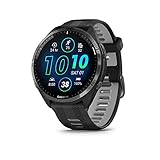 Garmin Forerunner 965
 AMOLED multisport with the training-load and threshold metrics most of these sessions assume you can see day to day.
Check price on Amazon → COROS APEX 2 Series GPS Watch
 Sapphire titanium and the longest battery in its class, which is the deciding feature once a day out runs past a few hours.
Check price on Amazon → Favero Assioma Uno Power Meter Pedal
 Single-sided pedal power, the cheapest honest entry into training with watts rather than estimating from heart rate.
Check price on Amazon →As an Amazon Associate we earn from qualifying purchases, at no extra cost to you.