Short answer: the best-known ultra races in California are the Western States 100 (100.2 miles, Olympic Valley to Auburn), the Tahoe 200 (about 205 miles around Lake Tahoe), the Lake Sonoma 50, and the Quicksilver 100K. For a first ultra, the Bay Area 50Ks in the Marin Headlands and on Mt. Tamalpais are the usual starting point.
California has one of the deepest ultra calendars in the country, with races nearly year-round from Marin to the Sierra. The table below sorts the main ones by distance.
| 100 miles | Western States 100: Olympic Valley to Auburn, 18,000+ ft of climb, lottery entry |
|---|---|
| 200 miles | Tahoe 200: about 205 miles around Lake Tahoe |
| 100K | Quicksilver 100K: San Jose foothills, a common Western States tune-up |
| 50 miles | Lake Sonoma 50 (Sonoma County); Bishop High Sierra 50 (eastern Sierra) |
| 50K | Marin Ultra Challenge, Mt. Tam Trail Run and other Bay Area 50Ks |
| Timed | San Francisco One Day, a flat 24-hour event |
California has the deepest ultrarunning calendar in America, anchored by Western States, the Tahoe 200, and a year-round bench of 50Ks and 50-milers from Marin to San Diego. The trails are runnable, the weather is mostly forgiving, and the community is the largest in the country. Below: the races that matter.
The 100-milers and 200-milers
Western States 100
100.2 miles from Olympic Valley to Auburn. The original American 100. The race every American ultrarunner spends years trying to enter. Read the Western States briefing →
Tahoe 200
205 miles around Lake Tahoe. The most beautiful 200-miler on the calendar. Read the Tahoe 200 briefing →
The 50-milers and 100Ks
Lake Sonoma 50
50 miles in Sonoma County, ~10,500 ft vert. Historically a Western States Golden Ticket race, where top finishers could earn entry, and one of the most competitive 50-milers in the country. Spring.
Marin Ultra Challenge 50K + 50M
50K and 50-mile distances on the Marin Headlands. ~7,500 ft vert (50K) / ~10,000 (50M). March. Iconic technical Bay Area trail.
Bishop High Sierra 50
50 miles east of the Sierra crest. ~7,500 ft vert. May. Less famous than the western races but a beautiful course; fewer crowds.
The 50Ks worth knowing
Quicksilver 100K
San Jose foothills. ~12,000 ft vert. May. Excellent training race for Western States.
North Face Endurance Challenge: California
50K and 50-mile distances at the Marin Headlands. November. Major series with strong field; great first ultra option.
Mt. Tam Trail Run
50K on Mt. Tamalpais. ~8,000 ft vert. February. Iconic technical Bay Area course.
San Francisco One Day
Timed 24-hour race in Crissy Field. The classic flat 24-hour event for distance-PR chasers.
The Pacific Crest Trail dream
California's section of the Pacific Crest Trail (~1,690 mi) is the longest stretch of single-track ultrarunning terrain in America. Even non-PCT-thru-hikers run sections of it for training. The Sierras (PCT miles 700–1,700) are the prettiest mountain-running country in the U.S.
Where to train if you're chasing a California 100
- San Francisco / Marin: Bay Area trails (Mt. Tam, Marin Headlands), strong running culture, varied terrain.
- Lake Tahoe / Truckee: altitude (6,200 ft), mountain access, year-round trails. Best mimics Western States conditions.
- Mammoth Lakes: high-altitude (7,800 ft), Sierras at the door. Premier training base.
- Auburn: the WSER finish line town. Many WSER hopefuls live here for the 6 months before their race year.
Common questions
What is the most famous ultramarathon in California?
The Western States 100, run since 1977 from Olympic Valley to Auburn. Entry is by lottery after a qualifying finish.
Are there 100-mile races in California besides Western States?
Yes. Western States is the best known, and the calendar also includes the Tahoe 200 for multi-day runners and several 100K and 50-mile races that serve as 100-mile build-ups.
What is a good first ultra in California?
A 50K in the Bay Area, such as the Marin Headlands or Mt. Tamalpais races: well-marked trails, strong fields and easy logistics.
Sources: official race websites and our race briefings. Dates, distances and entry rules change each year; confirm with each race. Researched, not professional coaching advice.
What these sessions assume you are measuring with
Every pace, zone and power figure here needs something recording it. These three cover running, long days and the bike.
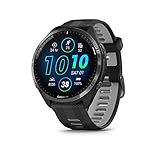 Garmin Forerunner 965
AMOLED multisport with the training-load and threshold metrics most of these sessions assume you can see day to day.
Check price on Amazon → COROS APEX 2 Series GPS Watch
Sapphire titanium and the longest battery in its class, which is the deciding feature once a day out runs past a few hours.
Check price on Amazon → Favero Assioma Uno Power Meter Pedal
Single-sided pedal power, the cheapest honest entry into training with watts rather than estimating from heart rate.
Check price on Amazon →As an Amazon Associate we earn from qualifying purchases, at no extra cost to you.